
Why your list is different
Italian has no TH, so "think" comes out with a T or an S and "this" with a D. Almost every Italian word ends in a vowel, so one slips onto English endings: "big" becomes "bigg-e". Italian says every vowel in full, which merges ship with sheep and cat with cut, and makes the weak vowel in "about" too strong. Italian already has V, so that is not on the list.
In short: Italian words nearly always end in a vowel, so one slips in after English word endings ("big-e"), and Italian has no TH, those come first.
In italiano quasi tutte le parole finiscono con una vocale, così ne aggiungi una anche in inglese («big-e»). E il suono TH in italiano non c'è: per questo partiamo da qui.
These are ordinary first-language transfer patterns, the kind any teacher who works with Italian speakers predicts before the student opens their mouth. They are not measurements of you. Test each contrast below and keep the ones you genuinely cannot hear.
The order worth working in
Work one contrast at a time, five to ten minutes a day, and do not start the next until the current one is boring. Three at once is already too many.
1. TH as in "think"
The tongue tip sits between or just behind the teeth with no voice. Most languages do not have it, and substitute T, S or F.
How to make it. Put your tongue tip lightly against the back of your top teeth so air escapes around it, and do not add your voice.
Test yourself: think / sink · three / tree · path / pass · thin / tin
2. TH as in "this"
The same tongue position as "think" with the voice on. It appears in the most common words in the language, so the substitution is heard constantly.
How to make it. Same tongue position as "think", then add your voice. You should feel the buzz in your throat.
Test yourself: they / day · breathe / breeze · other / udder · then / den
3. Word endings without an extra vowel
English words often stop on a consonant, and the word ends there. Adding a small vowel after it gives the word an extra syllable, so listeners hear a different word or have to work it out.
How to make it. Say the last consonant and close your mouth. Nothing comes after it. Record yourself and listen for a vowel at the end.
Test yourself: big / bigger · cat / catty · luck / lucky · stop
4. Long and short I
English separates the long vowel in "seat" from the short, more relaxed one in "sit". Languages with one I sound merge them.
How to make it. The short one is not just quicker, it is looser: relax the tongue and let the sound fall slightly.
Test yourself: seat / sit · sheep / ship · feel / fill · leave / live
5. The weak vowel
Unstressed English syllables collapse to a short, colourless vowel. Giving every syllable its full value is the main thing that makes speech sound effortful and evenly timed to an English ear.
How to make it. Say the word with only the stressed syllable clear and let the others blur. It should feel like you are being lazy.
Test yourself: banana · about · the doctor · a problem
6. The vowel in "cat"
An open front vowel missing from many languages, usually replaced by the vowel in "bed" or a longer A.
How to make it. Drop your jaw further than feels natural and keep the tongue forward.
Test yourself: cat / cut · bad / bed · man / men · sat / set
What you can skip
Italian already gives you V and the tapped T, so practising them is not a gentle start, it is wasted time. Most English pronunciation courses teach the same list to everyone, which means part of what you are paying attention to is work you finished in childhood.
Skip those and spend the time on the list above instead.
How to practise one of these
The sequence matters more than the hours, and the first step is the one everyone skips.
Hear it before you say it. Take a pair from the list, have something say one of the two words at random, and name which you heard. If you cannot do this reliably, producing the sound will not help: you will approve of your own wrong version every time, because it matches what you think you heard.
Then say it alone, slowly and too big. Exaggerate. You will lose roughly half of any exaggeration when you speed up, so aim past the target.
Then put it in words, in all three positions. Start, middle and end. A sound you can manage at the start of a word often collapses at the end, and the end of the word is where English keeps its grammar.
Then use it in something you were going to say anyway. A sentence about your day, at normal speed, unscripted. This is the only step that transfers into a real conversation, and it is where most practice stops short.
Speakle · the English practice app for fluency and confidence
One app for everything that gets you speaking
Most apps train one piece: words, sounds or a chat window. Speakle puts the whole road to fluent, confident English in one place, and every part of it ends with you speaking.
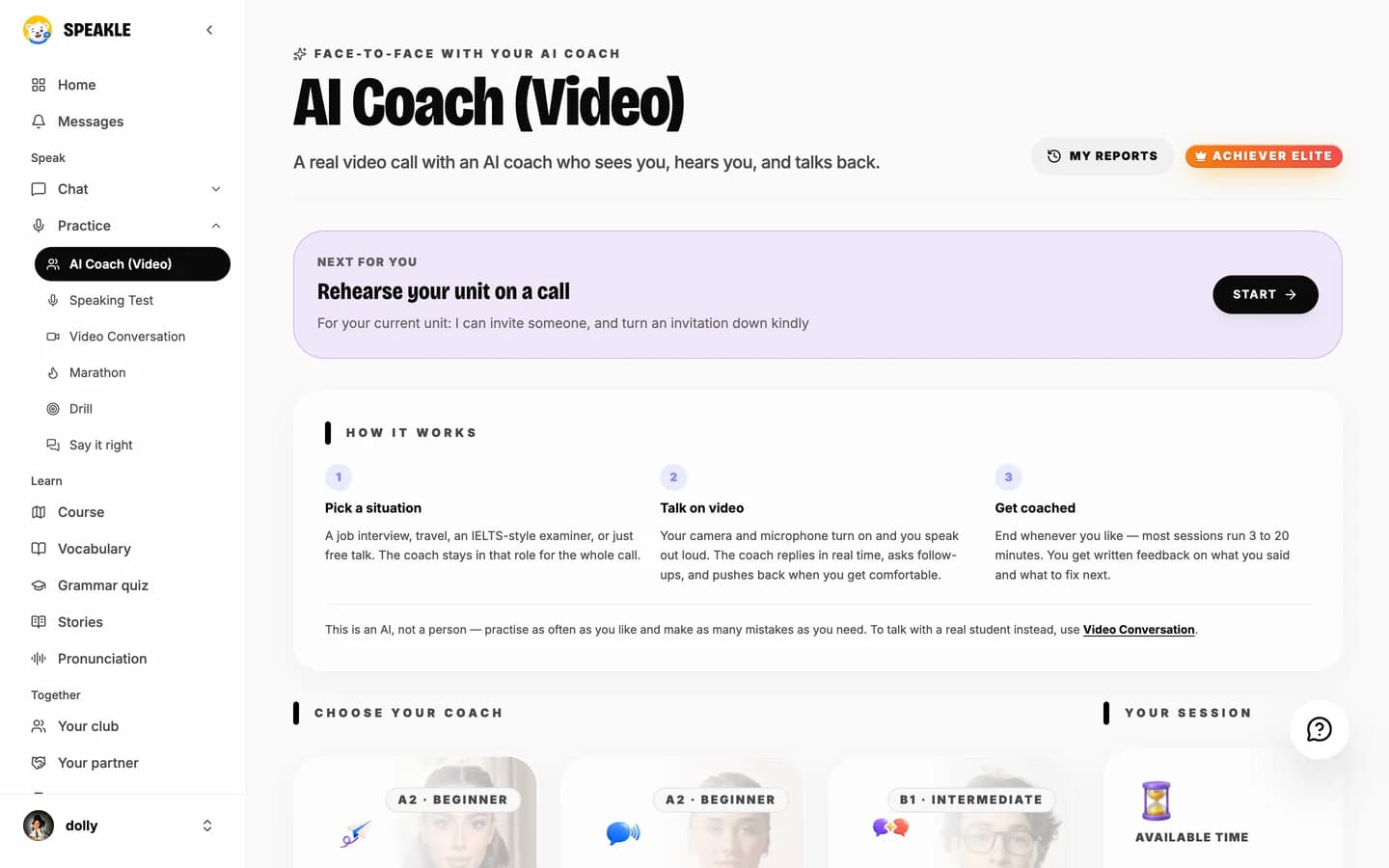 Live coachFace to face with an AI coach, on videoJob interviews, debates, travel, IELTS speaking or an open conversation. The coach stays in role for the whole call and nothing is scripted.
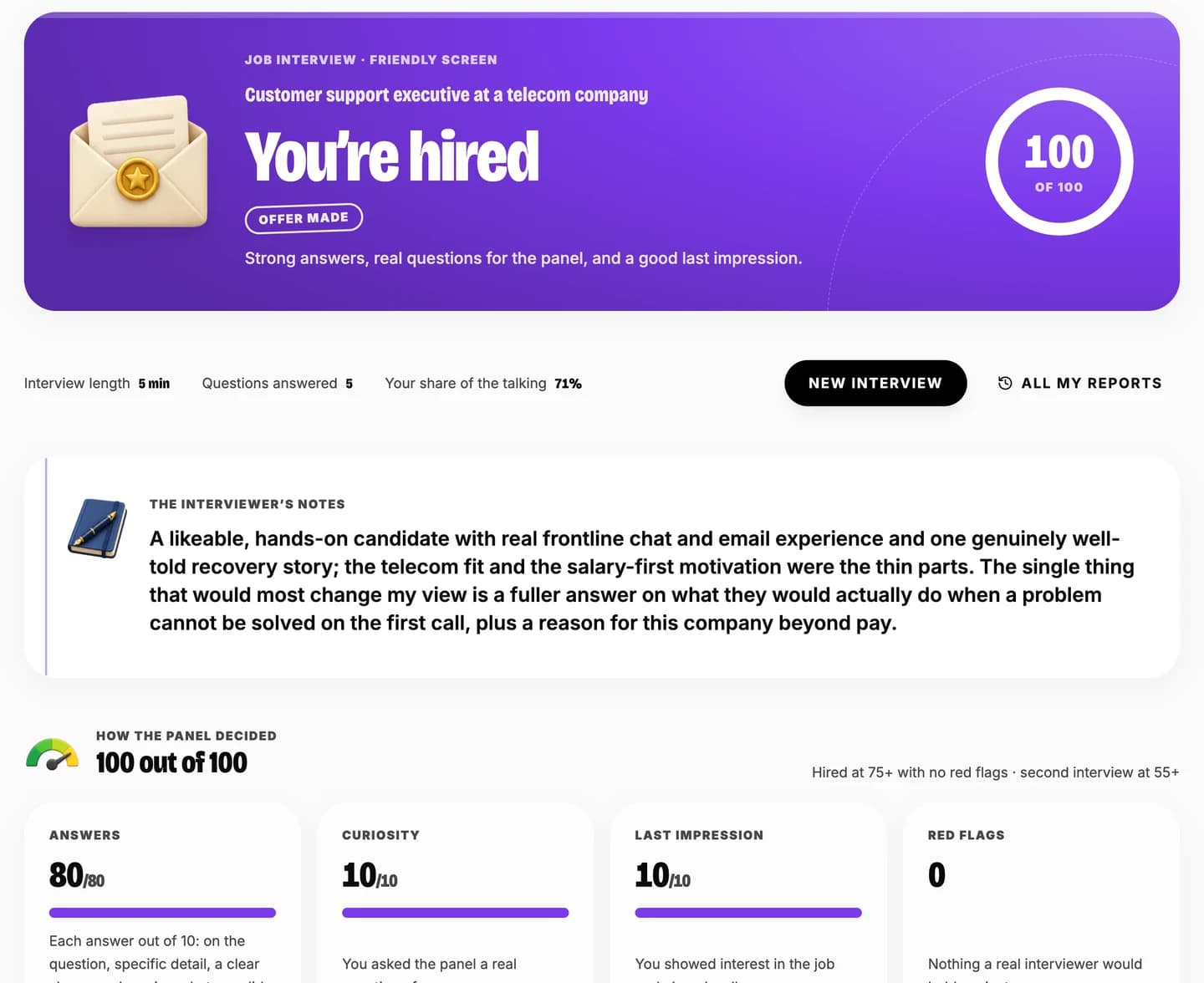 ReportsA report after every callAn interview ends in a hiring decision, a debate is won or lost, a trip earns a stamp at each stop.
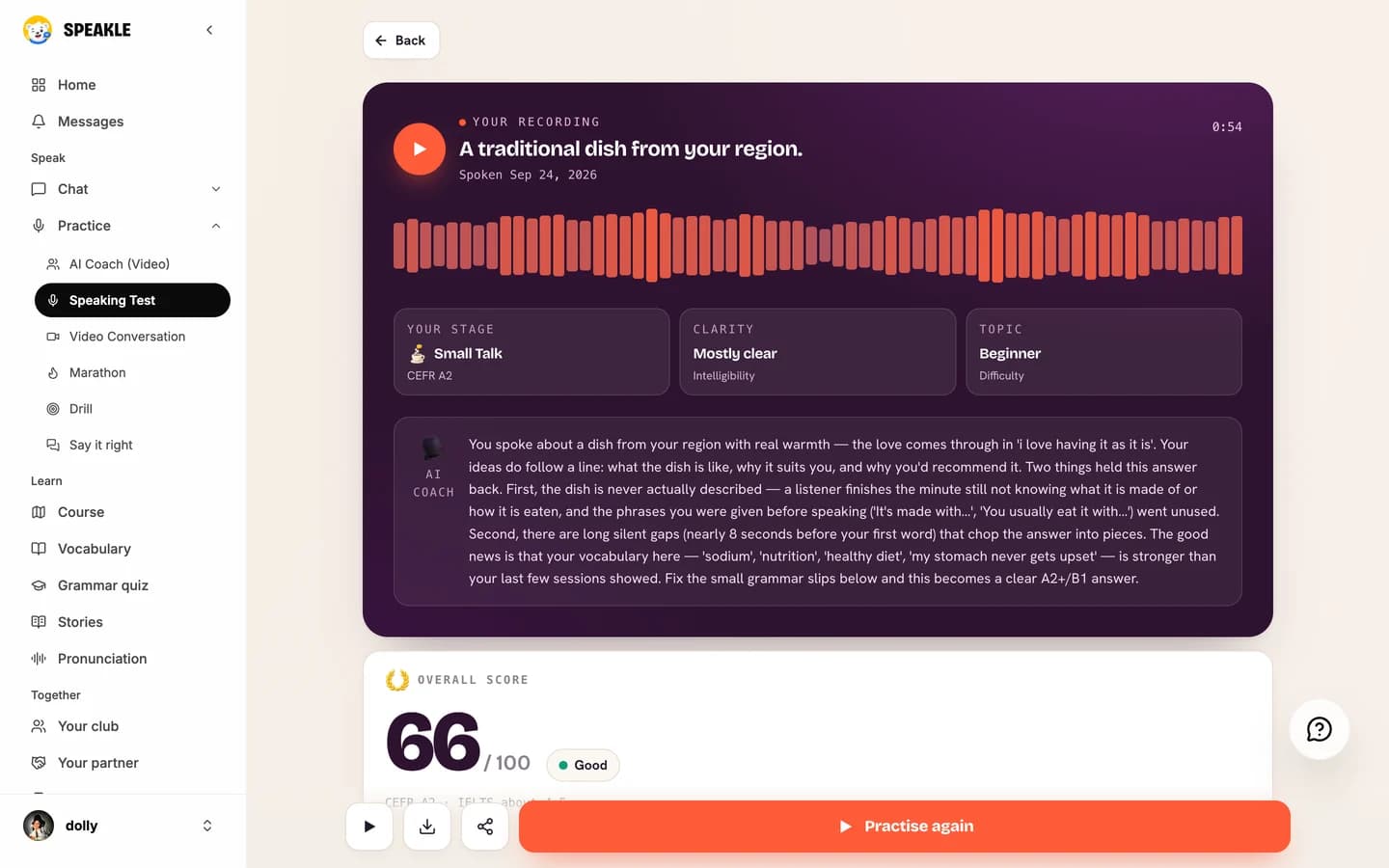 Every sessionYour speaking, measuredPronunciation, fluency, grammar, vocabulary and coherence, with a CEFR level and the one thing to fix first.
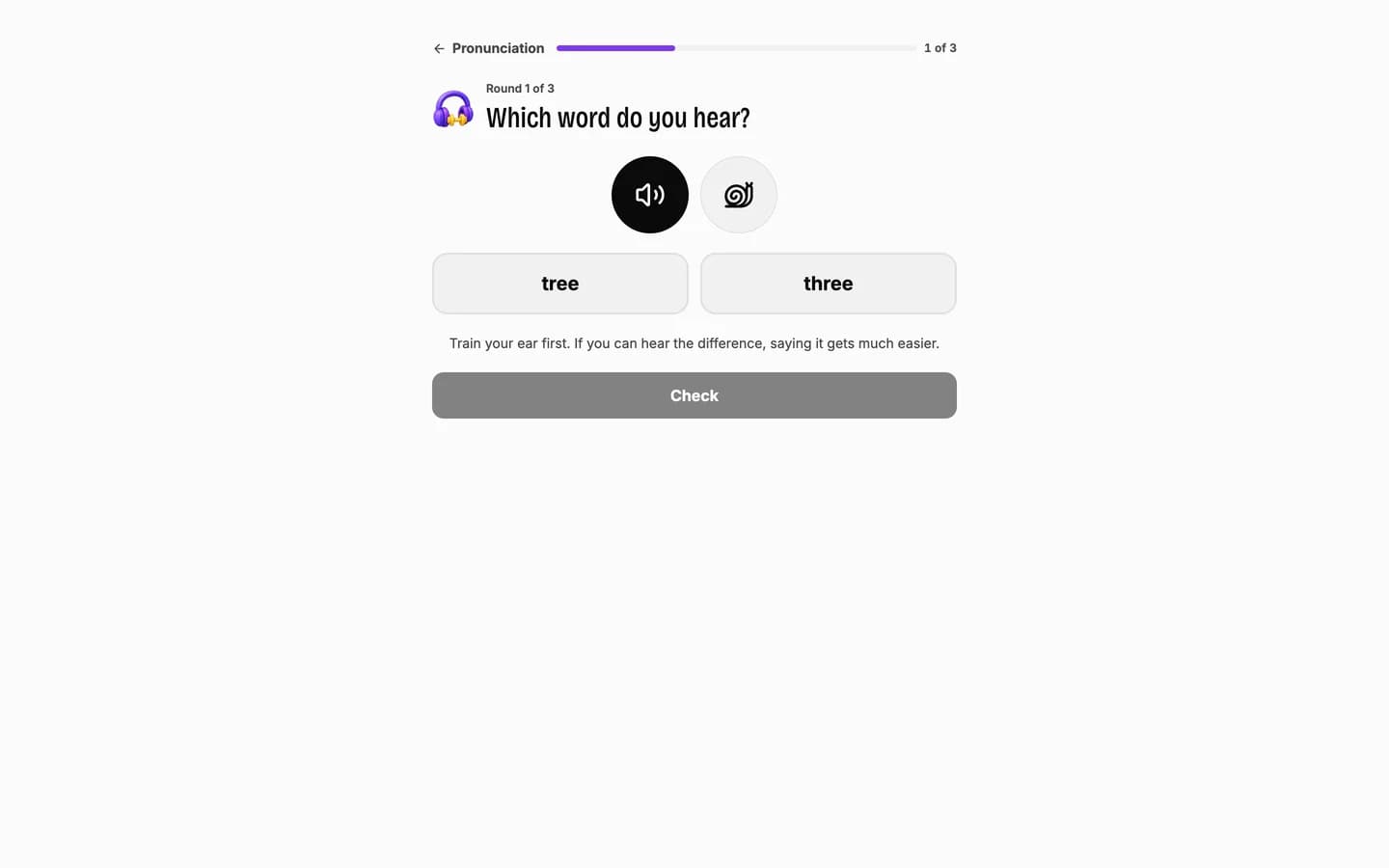 PronunciationPronunciation from your first languageSounds your language merges come first; sounds it already gives you are skipped.
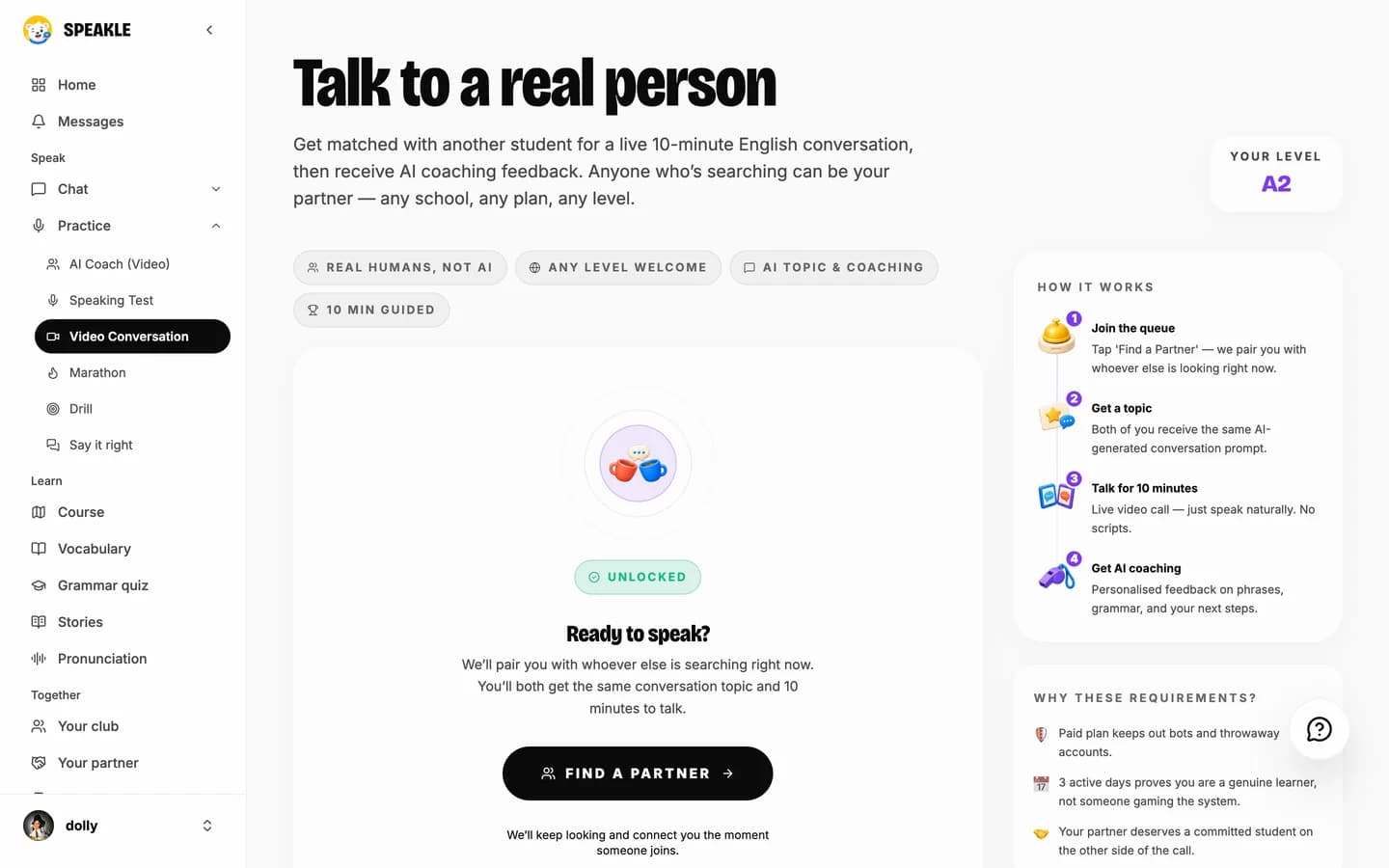 PeopleReal learners, on videoTen minutes with another learner at your level, then coaching on what you both said.
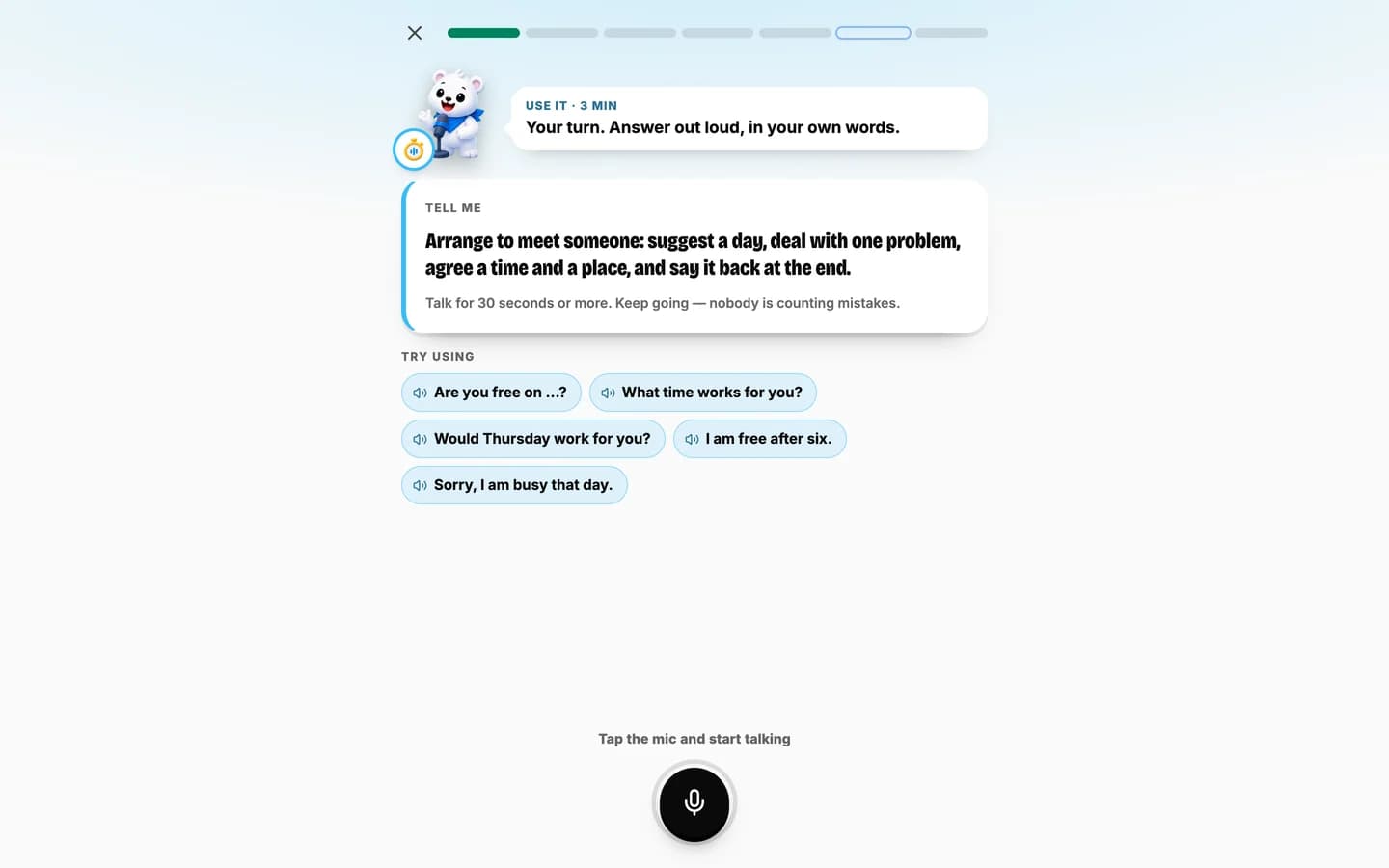 CourseA course where every step is spoken109 units from A1 to C2. Each step is a real task you say out loud, not tiles to tap.
Checking yourself without a teacher
Your own ears are the problem: you hear what you meant to say rather than what you said.
Record a sentence and listen to it a few hours later. The delay matters, because played back immediately your memory of the intention writes over what you actually hear.
The quickest outside check is the free pronunciation checker: read one sentence aloud and it scores each word and names the sounds that fell short. No account, and the recording is deleted once it has been scored.
Then use a transcript. Speak into anything that turns speech into text and look at which words come back wrong. It is a blunt instrument, and speech recognition is measurably less accurate on accented English, so it will sometimes mark you wrong when you were right. What counts is repetition: a word it gets wrong across different sentences on different days is a real signal, and a one-off is noise.
How Speakle handles this
Speakle builds the pronunciation path from the language you already speak, using the same list as this page. The contrasts Italian merges are pulled to the front, and V and the tapped T are dropped from your path entirely. Each sound is worked in the four-step order above rather than as a quiz, starting with an ear-training step, because hearing the difference is what makes correcting yourself possible.
The sounds you miss during ordinary speaking sessions feed back into what you are given to practise, so the list stays yours rather than staying the one on this page. Sounds are named the way a teacher names them, by a word you already know and the letters that spell it, unless you turn phonetic symbols on. And every session shows you the transcript it scored, so you can tell a genuine mistake from the recognition mishearing you.
If you want the wider picture first, the pronunciation guide covers what actually stops people being understood, and the English speaking hub covers the habit all of this sits inside. The free speaking test needs no account.